Stop Improvising Your Express API Architecture
A reusable recipe for structuring and extending your Express API without letting it drift into chaos.
Stop second-guessing every architecture decision
Keep endpoints consistent as new features pile up
Spend more time shipping API behavior, less time reorganizing files
"This is probably the best architecture for keeping your API simple and organized."
Adrien B.
Senior Backend Developer
"AI helped me build my API, but I don't know if it's right."
According to the latest Stack Overflow Developer Survey, 66% of developers say they are spending more time fixing "almost-right" AI-generated code.

That points to the real danger: poorly engineered AI-generated code doesn't necessarily look wrong at first glance.
It may solve the problem at hand, pass manual tests, and even look clean enough during a quick review.
But without a thorough analysis, it can still introduce unnecessary complexity, hidden side effects, or one-off decisions that don't fit the application's patterns and boundaries.
That's generally because when prompting AI without a clearly defined standard, every single iteration introduces a new structure, a new convention, or a new one-off decision.
And over time, those inconsistent decisions compound into an application that becomes increasingly harder to understand, extend, and trust.
AI can write the code, but it can't define the rules.
A better prompt may produce a better answer, but if the application doesn't have a clear standard, you're still giving AI too much room to improvise.
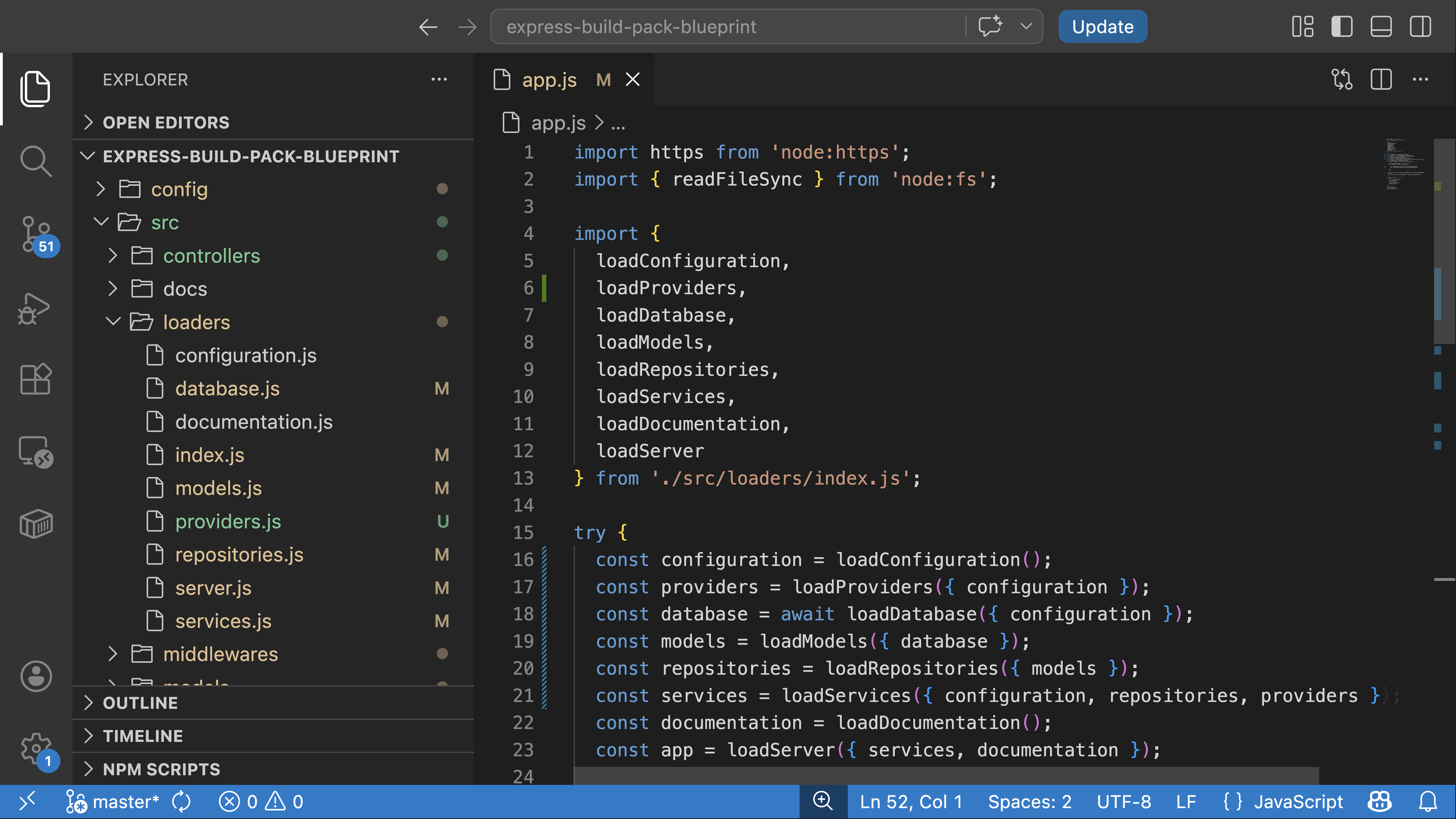
A prompt often describes what the feature should do, but it rarely defines how the solution should fit into the rest of the system—and that part needs to exist before AI enters the workflow.
As a backend developer, you may already know how the individual Express pieces work. But knowing the pieces isn't the same as having a standard for how they should work together.
Tutorials can help you solve isolated implementation problems. However, they rarely define how the whole API should be bootstrapped, structured, extended, and kept consistent as it grows.
So when AI enters your coding workflow, it'll simply fill the gaps left by your missing implementation standard.
That's why the Express Brew Kit gives you that standard upfront: a coherent set of rules for bootstrapping your API, structuring it into clean layers, defining how those layers interact, and keeping every new endpoint consistent with the rest of the codebase.
The 9 Rules Every API Standard Should Have
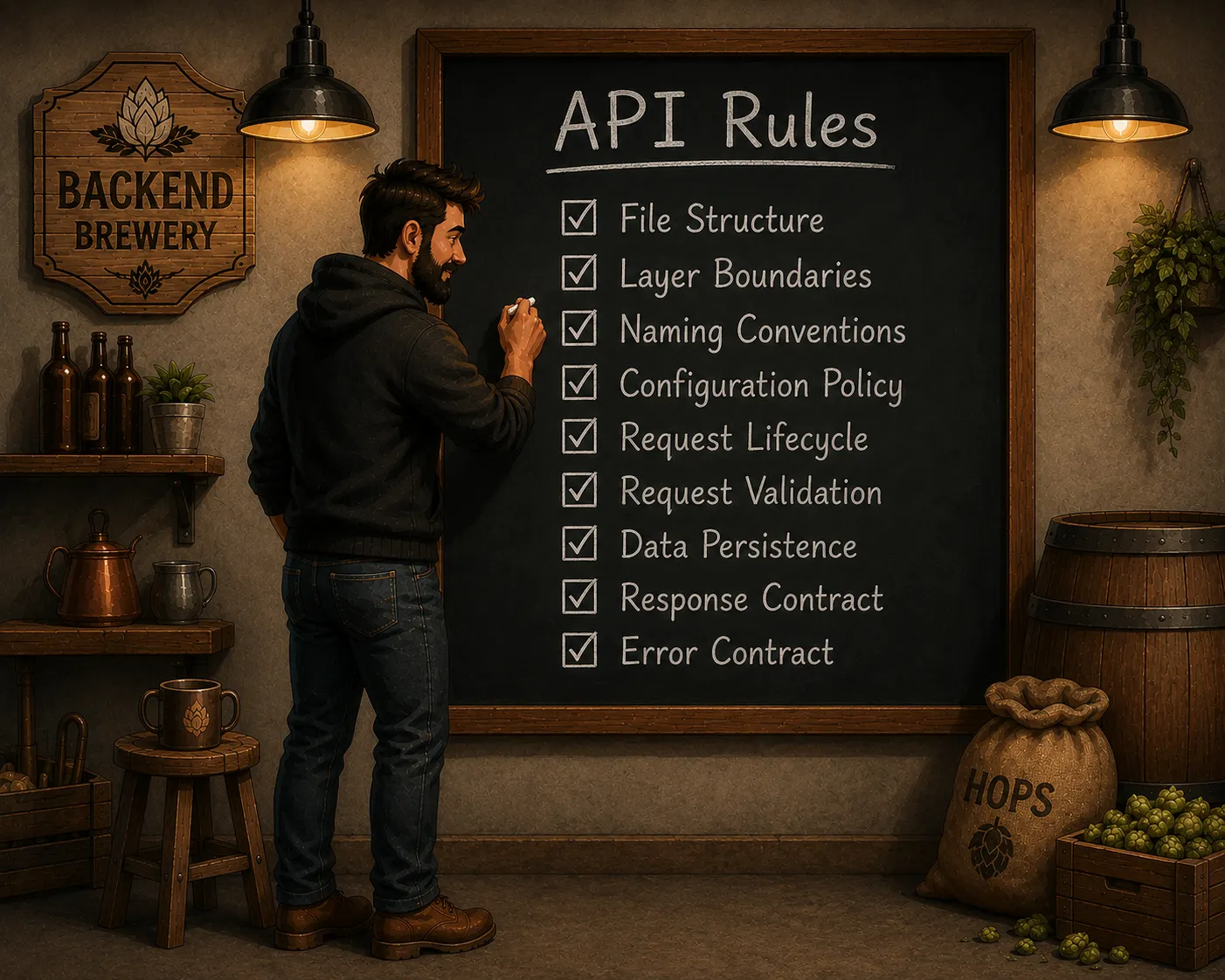
If you've built an API before, you've probably had to answer questions like these:
↳ Where should this new file go?
↳ Where should this logic live?
↳ How should this endpoint validate input?
↳ How should this endpoint access the database?
↳ Should this response follow the same shape as the others?
Without a clear architecture standard, these questions usually get answered while coding. Each endpoint provides its own answer, and the API slowly drifts into an amalgam of anti-patterns.
That's why a serious Express API needs more than a few folders and working routes.
It needs a clear set of rules.
1. File Structure
This rule defines where each type of module belongs in the application so developers know where each part of a new endpoint belongs before the implementation starts.
2. Naming Conventions
This rule defines how files, functions, modules, and architecture pieces should be named so related files and modules are easily found and connected mentally across the various layers of the application.
3. Configuration Policy
The rule defines how environment values are loaded, mapped, and exposed so runtime requirements are validated before the application starts.
4. Layer Boundaries
This rule defines what each layer is responsible for so routing, business logic, and database access don't get mixed together as the API grows.
5. Request Lifecycle
This rule defines how an HTTP request moves through the application from entry point to response so every endpoint follows a predictable execution path.
6. Request Validation
This rule defines where input is checked, what parts of the request are validated, and how invalid data is rejected before it reaches the application's core.
7. Data Persistence
This rule defines how the application reads from and writes to the database so business logic doesn't depend on ORM details.
8. Response Contract
This rule defines how successful API responses are shaped so clients receive successful responses through a predictable structure.
9. Error Contract
This rule defines how application failures are normalized and exposed so clients can parse failures safely and consistently.
Ingredients Alone Are Not Enough Without the Recipe
The Express Brew Kit blueprint turns the 9 ingredients into a working API where the important backend decisions are already made, wired, and documented.

The Express Brew Kit blueprint prewires all the standard features every serious API needs from the start, without trying to guess the product you're building.
That part is intentionally left open.
This allows you to first understand how the API is structured, how requests move through the layers, how responsibilities are separated, and how each endpoint stays consistent with the rest of the codebase.
Then to build the features your application actually needs, using the same rules and implementation flow.
Clean ECMAScript Modules
A predictable project structure where routes, controllers, services, repositories, models, schemas, loaders, docs, and shared code each have a clear place.
Native Node.js Configuration Loader
A dedicated startup system that loads, validates, maps, and injects configuration before the rest of the application is initialized.
Prewired Express Request Pipeline
A complete Express request flow already wired from routing and validation to business logic, persistence, responses, and centralized errors.
Joi Request Validation System
Boundary-level validation for request bodies, route params, and query values so invalid input does not leak into the service layer.
Standardized & Centralized Error-Handling
A single error-handling path that turns application errors into consistent HTTP responses instead of formatting failures in every controller.
Built-In Endpoint Rate-Limiting
Protects selected endpoints from excessive traffic by applying request limits where abuse, spam, or accidental overload are most likely to happen.
Extensible Sequelize ORM Structure
A persistence structure that separates models, repositories, and database access so the API can grow without spreading queries everywhere.
Health & Fallback Endpoints
Health check, fallback, and example endpoints included to demonstrate the structure and give the API useful defaults from the start.
OpenAPI Documentation
A dedicated documentation setup for describing endpoints clearly and keeping the API contract easier to inspect as the project grows.
Try the full kit for 30 days. If it doesn't help you build Express APIs with more structure and confidence, email me and I'll refund you.
From Improvised to Structured API Architecture
Here's a side by side comparison between most APIs and the Express Brew Kit's architecture.
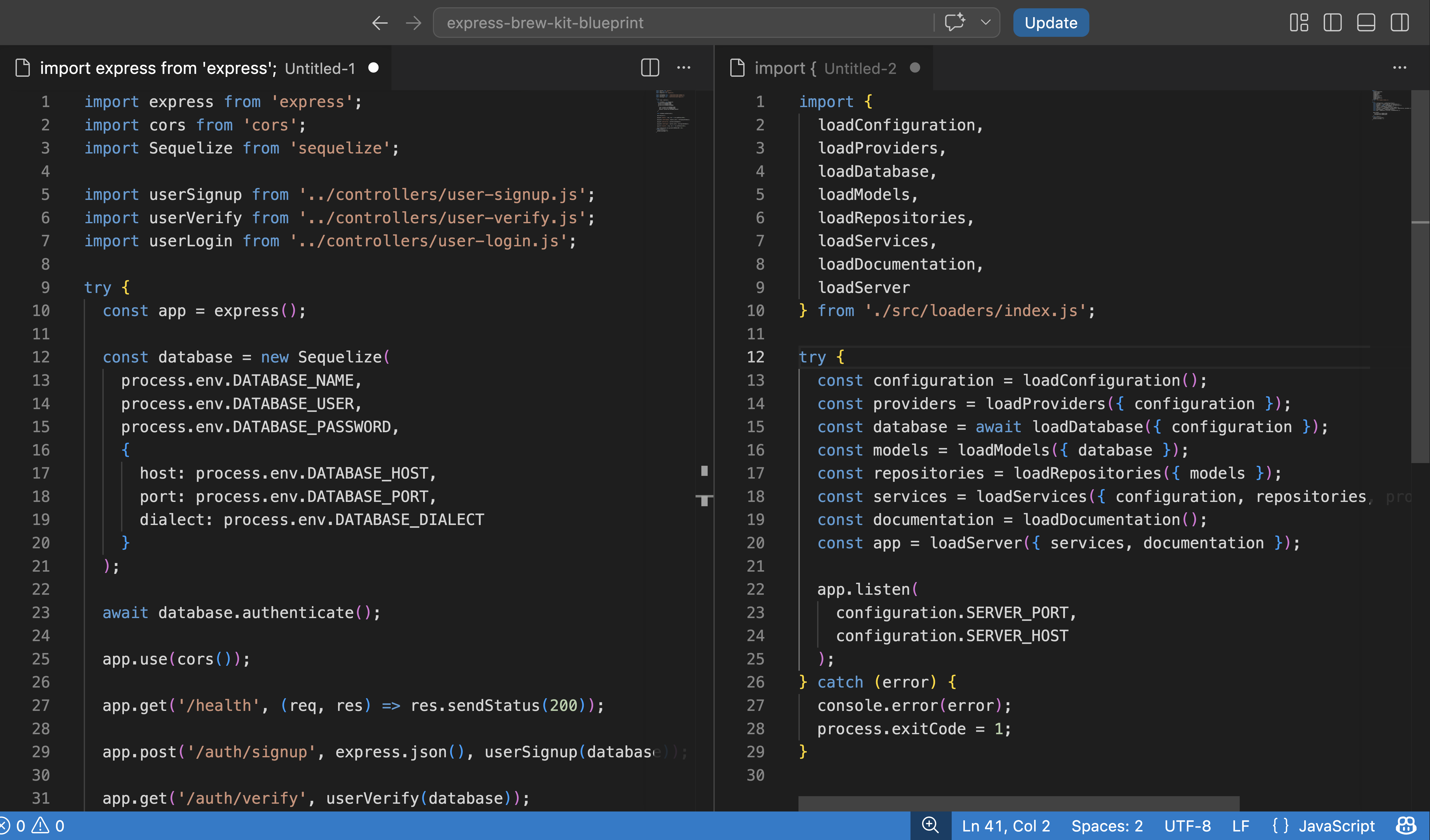
Without a standard:
- Files are added wherever they seem to fit.
- Each endpoint follows its own structure.
- Controllers often contain business logic.
- Validation happens in different places depending on the endpoint.
- Database access leaks into controllers or services.
- Responses and errors are handled case by case.
- The API works, but becomes harder to understand, extend, and trust.
With the Brew Kit standard:
- Files have a predictable place.
- Every endpoint follows the same implementation flow.
- Controllers coordinate the request instead of owning business logic.
- Validation happens at the request boundary.
- Database access stays behind repositories and models.
- Responses and errors follow consistent contracts.
- The API is easier to review, extend, and keep consistent.
Try the full kit for 30 days. If it doesn't help you build Express APIs with more structure and confidence, email me and I'll refund you.
The Rulebook Behind the Standard
A 132-page implementation manual that explains why the blueprint is structured the way it is, how each layer should behave, and how to extend the API without turning it into a pile of one-off decisions.
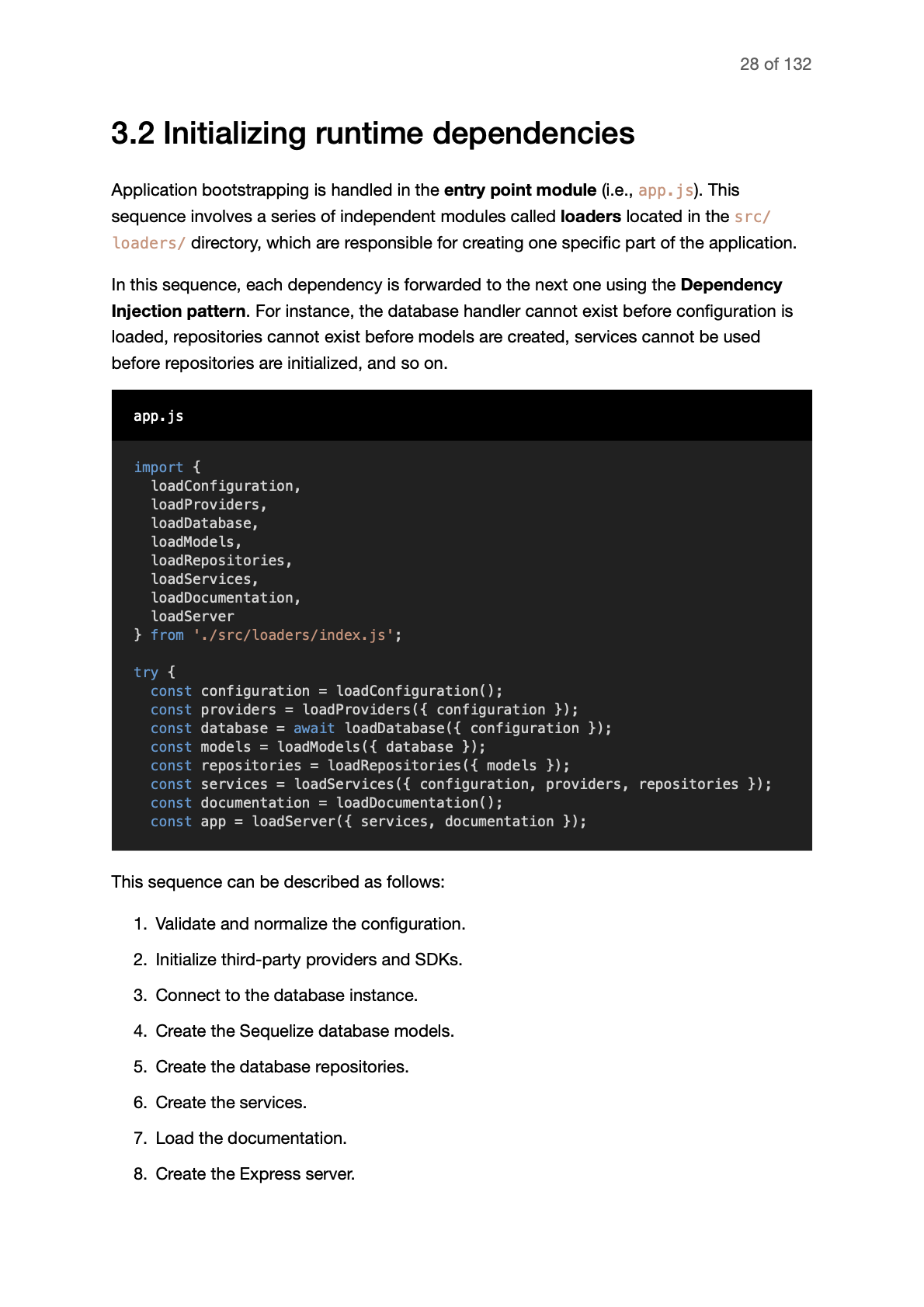
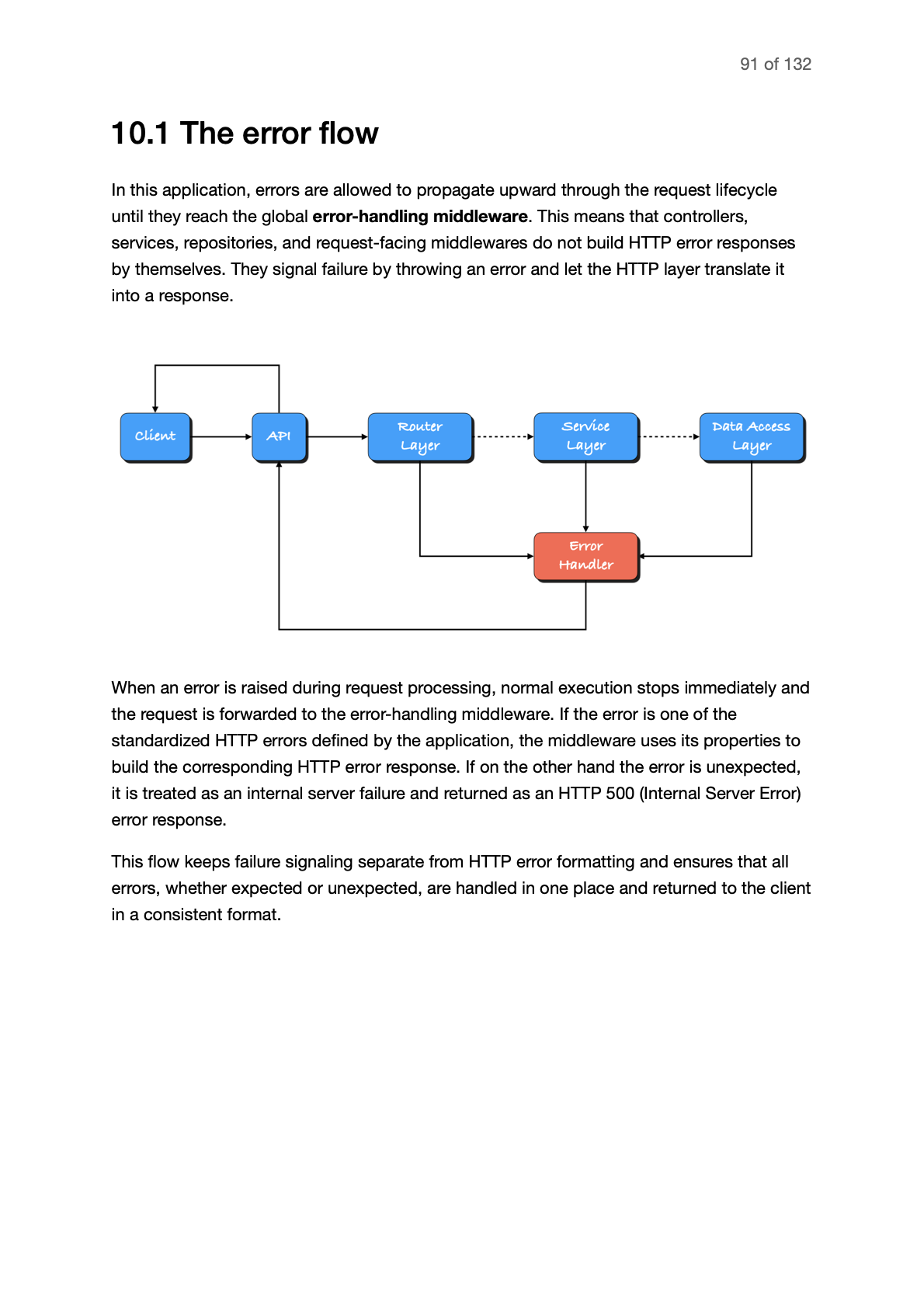
The manual defines how the API is bootstrapped, how the layers are structured, how they interact with each other, and how the whole system stays consistent as it grows.
This is the part that turns the blueprint from "some files you downloaded" into an implementation standard you understand.
The goal is to help you understand the blueprint deeply enough to extend it yourself, review generated code properly, and stop accepting one-off backend decisions just because they compile.
Architecture Overview
- Architecture overview10
- Request flow overview12
- Directory structure overview14
Setting Up the Application
- Installing dependencies17
- Starting the database18
- Configuring the application20
- Running the web server22
- Troubleshooting startup24
Bootstrapping the Application
- Modules overview27
- Initializing runtime dependencies28
- Listening for incoming HTTP requests30
- Handling startup errors31
- Handling SIGINT signals32
Handling Configuration
- Modules overview34
- Configuration files35
- Loading configuration38
- Validating configuration39
- Mapping configuration41
The Request Lifecycle
- Request pre-routing and routing44
- Request execution46
- Response creation47
- Error propagation48
The Router Layer
- Modules overview50
- Creating the web server51
- Application-level middlewares53
- Rate-limiting middlewares56
- Default endpoints60
- Creating controllers62
- Grouping related endpoints64
The Service Layer
- Modules overview68
- Creating services69
- Creating the service registry71
The Data Access Layer
- Modules overview74
- Connecting to the database75
- Modeling database tables76
- Implementing repositories80
Working with Providers
- Modules overview85
- Creating providers86
- Creating the provider registry88
Handling Errors
- The error flow91
- Modules overview92
- Throwing HTTP errors93
- Centralizing errors96
Validating Requests
- The validation flow101
- Modules overview102
- The validation objects103
- The validation middleware105
Serving Documentation
- Modules overview111
- The OpenAPI document112
- Loading the OpenAPI document114
- Serving the documentation115
Preparing for Production
- Installing and checking tools118
- Uploading the source code119
- Installing the dependencies122
- Configuring the application123
- Running the web server125
- Troubleshooting128
- Deployment checklist130
Get a FREE Preview
Want to inspect the standard before you buy?
Enter your email below and I'll send you 2 full-length chapters from the Brew Manual, so you can see how the architecture rules are explained before getting the full kit.
Bonus: The Practical Endpoint Implementation Recipes
A 57-page practical implementation guide that shows how to add signup, email verification, and login using the same standard as the blueprint.
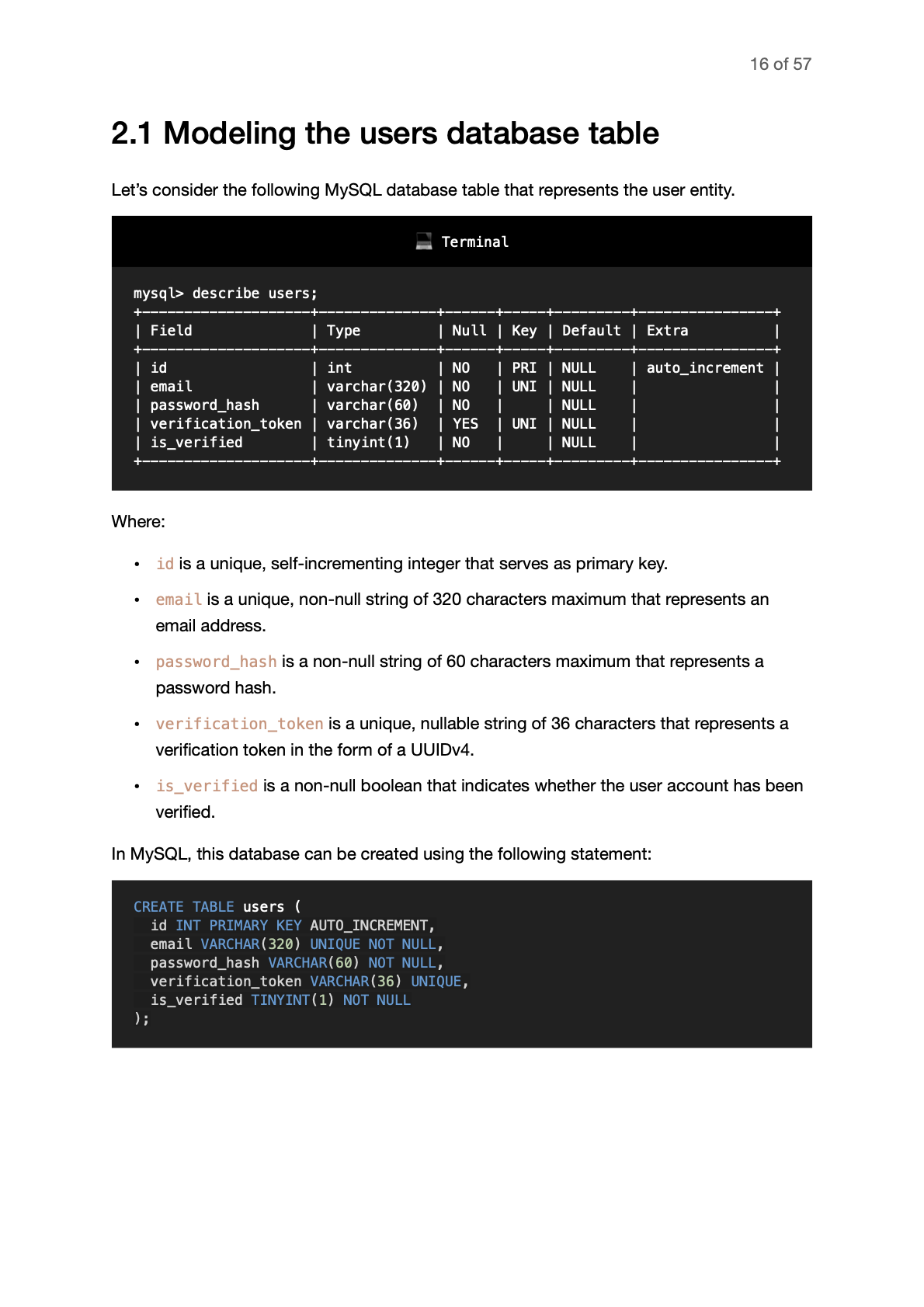
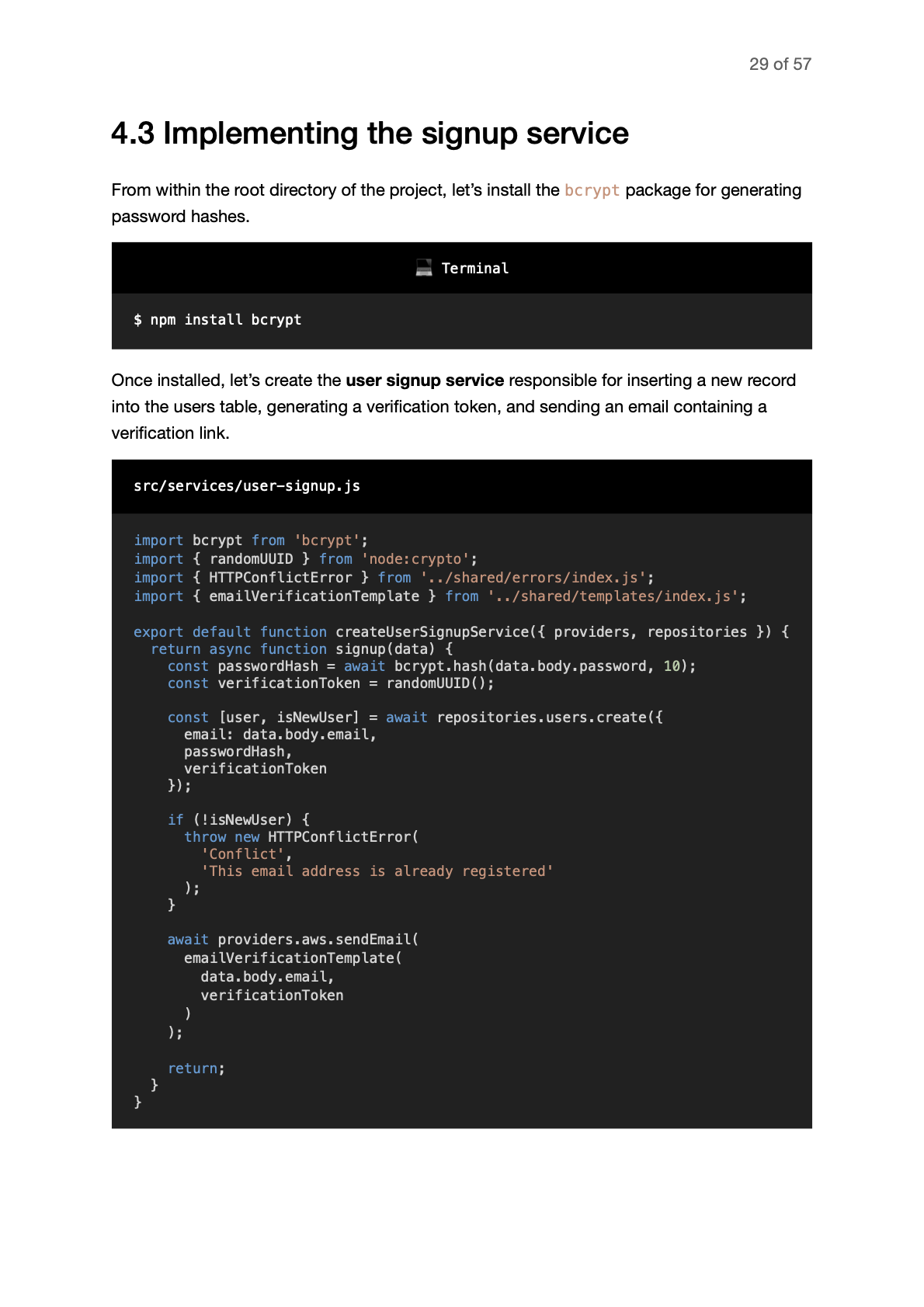
The recipes follow the same standard used by the API blueprint.
It starts from API contracts and database modeling, then moves through repositories, providers, services, controllers, routers, configuration, validation, and manual endpoint testing.
In short, you'll see what it looks like to add real API behavior without letting every endpoint choose its own structure.
Plus, get the API Endpoint Contract Template and the Endpoint Implementation Checklist.
Defining the API Contracts
- Defining the signup endpoint API contract8
- Defining the email verification endpoint API contract10
- Defining the login endpoint API contract12
Modeling the User Entity
- Modeling the users database table16
- Defining the database model17
- Defining the database repository19
Implementing the AWS Provider
- Installing the AWS SDK22
- Implementing the provider23
- Updating the configuration25
Implementing Signup
- Creating the signup validation object27
- Creating the verification email template28
- Implementing the signup service29
- Creating the signup controller31
- Creating the authentication router32
- Manually testing the signup endpoint34
Implementing Email Verification
- Creating the email verification validation object38
- Implementing the email verification service39
- Creating the email verification controller41
- Updating the authentication router42
- Manually testing the email verification endpoint43
Implementing Login
- Creating the login validation object46
- Implementing the login service47
- Creating the login controller50
- Mounting the login controller51
- Updating the configuration52
- Manually testing the login endpoint53
Who This Kit Is For
This IS for you if:
You already know Node.js and basic Express.
You've built APIs before.
You're tired of every Express project ending up structured differently.
You use AI to generate backend code, but still want the architecture decisions to stay yours.
You want a repeatable way to add endpoints, validation, persistence, responses, and errors without improvising every time.
This is NOT for you if:
You want a beginner-friendly "learn Node from scratch" course.
You want hours of video content.
You are looking for a toy CRUD demo.
You are not yet comfortable reading and modifying backend code.
You want AI to replace your backend decisions instead of helping you implement them.

Hi, I'm Razvan 👋
I'm a senior Node.js developer with 15 years of experience building backend systems for all kinds of startups.
I created the Express Brew Kit because I got tired of seeing Express APIs held together by random tutorials, inconsistent patterns, and project-specific improvisation.
AI did not remove that problem though. It made the need for standards even more obvious. And if your backend architecture is not defined, AI will define it for you one endpoint at a time.
This kit packages the standard I wish more projects started with: clear layers, predictable request flow, consistent validation, centralized errors, reusable implementation rules, and a structure that both developers and AI can follow without turning the codebase into a pile of unrelated decisions.
Got Questions?
Is this just a boilerplate?
No. A boilerplate gives you starter files. The Express Brew Kit gives you the starter files, the rules behind them, and recipes that show how to extend the structure without breaking it. The point is not only to start faster. The point is to keep building consistently after the first feature.
What problem is this supposed to solve?
It solves the lack of consistency that appears when APIs are built by patching together tutorials, boilerplates, AI-generated snippets, and one-off fixes. The goal is to give you one clear standard for bootstrapping, structuring, and extending an Express API.
Why should I trust this standard?
Because it does not come from theory alone. It comes from years of working with backend architectures, and from real implementation in projects like BackendBrewery.dev.
How does this help with AI-generated code?
It gives AI a structure to follow. Instead of letting AI guess where validation, services, repositories, responses, and errors belong, you start from an API blueprint where those decisions are already made. You still own the architecture. AI helps you implement inside it.
Can I use it for a real project?
Yes. The whole point is to give you a standard you can actually build on. It is designed to help you start production-grade Express APIs with a cleaner foundation, while still leaving you in control of your own business logic and product-specific decisions.
How will I get the brew kit?
Once your payment is processed, you'll immediately receive a direct download link via email to download the brew manual, brew recipes, and the source code in ZIP format.
What if I'm not satisfied with this product?
If for whatever reason you're not satisfied with this product, you can send me an email within the first 30 days of your purchase and I'll refund your entire payment. No hard feelings, no questions asked.
I have more questions
Send me an email at support@backendbrewery.dev, I'll get back to you within 1-2 business days.
Brew Your Next APIs From a Real Standard
Start your next Express API from a reusable implementation standard before AI turns every endpoint into another architecture decision.
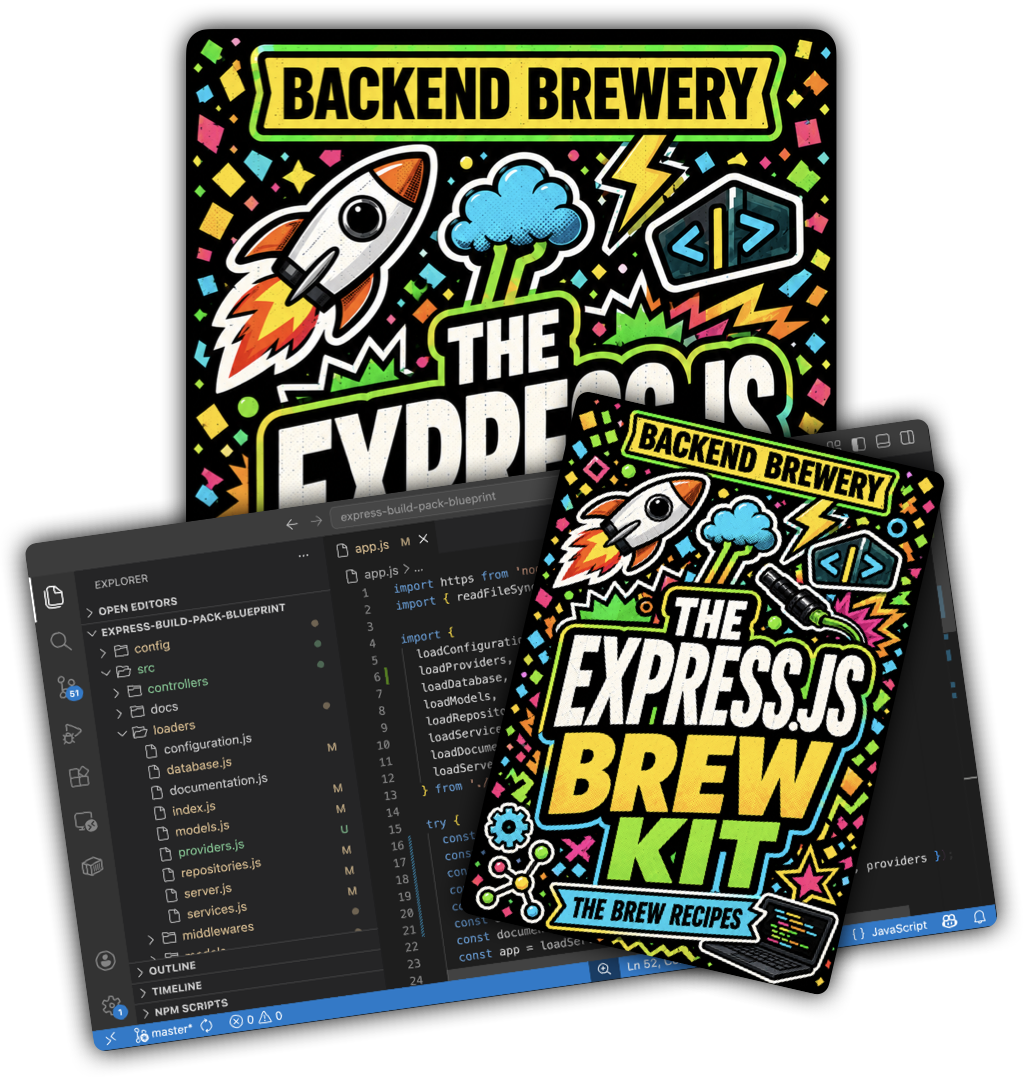
The API blueprint source code
The 132-page brew manual
The 57-page brew recipes
The endpoint contract definition template
The endpoint implementation checklist
30-day money-back guarantee
Once your payment is processed, you'll receive an email with a direct download link to all the brew kit resources in ZIP format.